
Fields in Mecklenburg County Property Tax Records
Assessment and collection live in separate offices. The Commissioner's public portal is where an ownership or value question starts. Bills, due dates, receipts, and delinquency belong to the Treasurer's pages. The payment inquiry portal can be slow to load. The county tax page or a call to the Treasurer works as a fallback.
| Field | What It Shows | Where |
|---|---|---|
| Assessed value | Land and improvement values used in the tax calculation | Commissioner of the Revenue |
| Market-value basis | Fair-market-value estimate at the assessment date | Commissioner of the Revenue |
| Relief or exemption | Qualifying disabled-veteran relief is administered by the Commissioner | Commissioner of the Revenue |
| Bill and payment status | Current charges, yearly paid tax, payment and delinquency | Treasurer |
| Town taxation | Town parcels may have county and town tax components | Treasurer and town rate records |
Mecklenburg County appraises real estate at fair market value. That figure is still a tax-year valuation, not the price from any particular sale. Per the county FAQ, fair market value means what a typical informed buyer would pay a willing seller. That transaction assumes ordinary conditions. The tax bill then applies a rate to that assessment. Keep three numbers straight. A deed's consideration and the assessor's value are never the same thing. Neither equals the total tax due.
July 1 and the Biennial Assessment Cycle
July 1 anchors Mecklenburg's assessment calendar. The county runs a general reassessment every two years. Each parcel is valued as it stands on that date. A partly complete structure can pick up a partial improvement value. That value is tied to its percentage of completion. The 2005 ordinance locked in the recurring July 1 schedule starting in 2006.
The county's assessment FAQ covers the fair-market-value method. The 2024 district and town reassessment handout adds local change context.
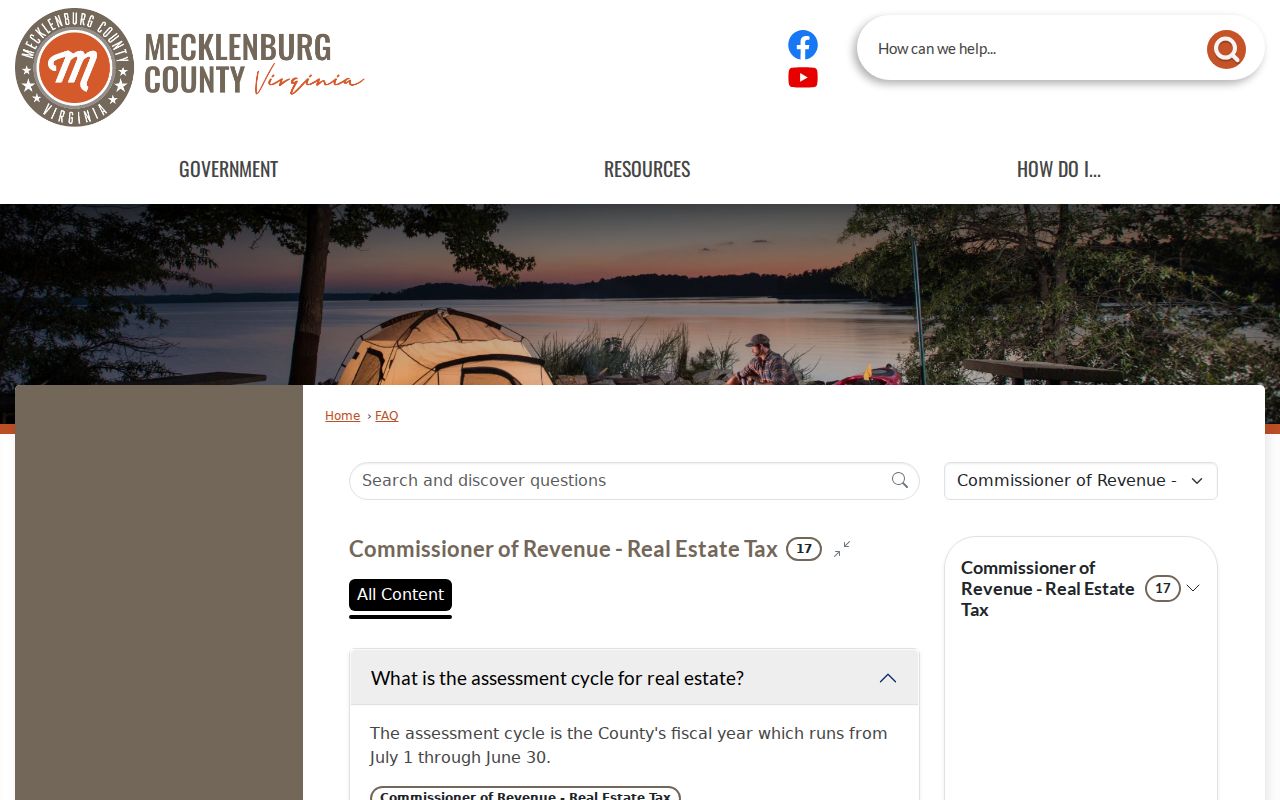
Use the county explanation to distinguish a mass appraisal from a recent arm’s-length sale.
Land, Improvement, and Total Value
Every account splits into three parts. Land value comes first, then improvement value, with a total on top. "Improvement" is the county's word for structures on a parcel. It does not signal new construction. The dwelling may have sat there for decades. When work is unfinished on July 1, the improvement value can reflect the share complete.
The assessment portal refreshes every Monday. Even so, the Commissioner's office record controls. Tie any parcel's assessed figure to the displayed year before comparing it against another source.
June and December Tax Due Dates
Mecklenburg County lists June 5 and December 5 as real-estate tax due dates. The county policy is to mail bills at least 30 days before the due date, although the page notes Virginia law requires at least two weeks. A missing bill does not cancel the payment obligation, penalty, or interest. Contact the Treasurer when a bill has not arrived and the Commissioner when the mailing address or assessment needs correction.
The county’s real-estate tax page gives the due-date and ownership notes. It says the bill is in the name of the owner as of July 1, which may differ from the name on a deed recorded later in the year.
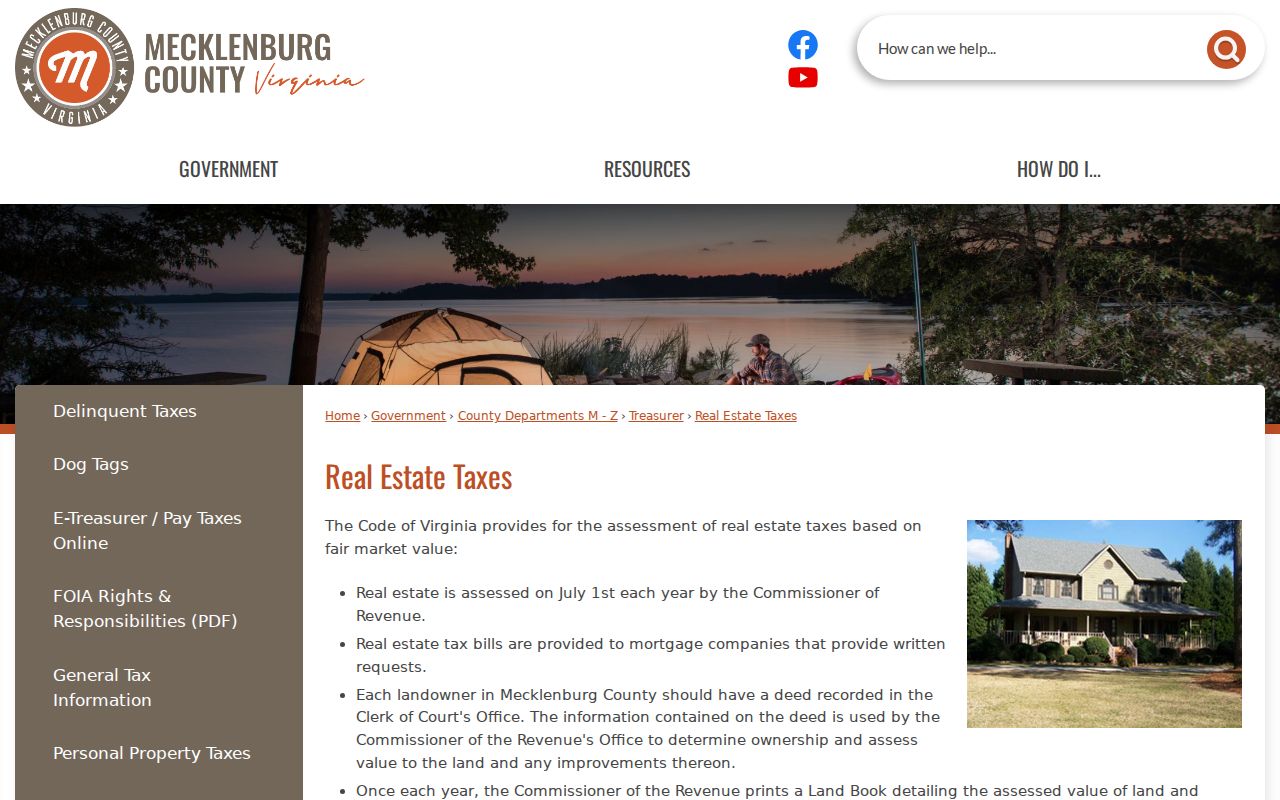
Keep the bill year with every receipt so a later payment check never gets tied to the wrong cycle.
Find a Bill or Payment Record
The Treasurer's online inquiry page offers real-estate payment lookups. It covers yearly taxes paid, bill history, and printable records. That MeckWeb address can redirect to an unavailable page, so the county tax page is the safer entry point. The Treasurer can confirm a payment or hand over the current portal route.
Payment options include e-check, credit, or debit, with a convenience charge on cards. A telephone payment line is listed at 855-748-3306. Make checks and money orders payable to County of Mecklenburg. A returned check draws a $35 service charge. Want a mailed receipt? Keep the bill's top half or enclose a stamped self-addressed envelope.
The Treasurer payment inquiry page documents the route that may not load now.
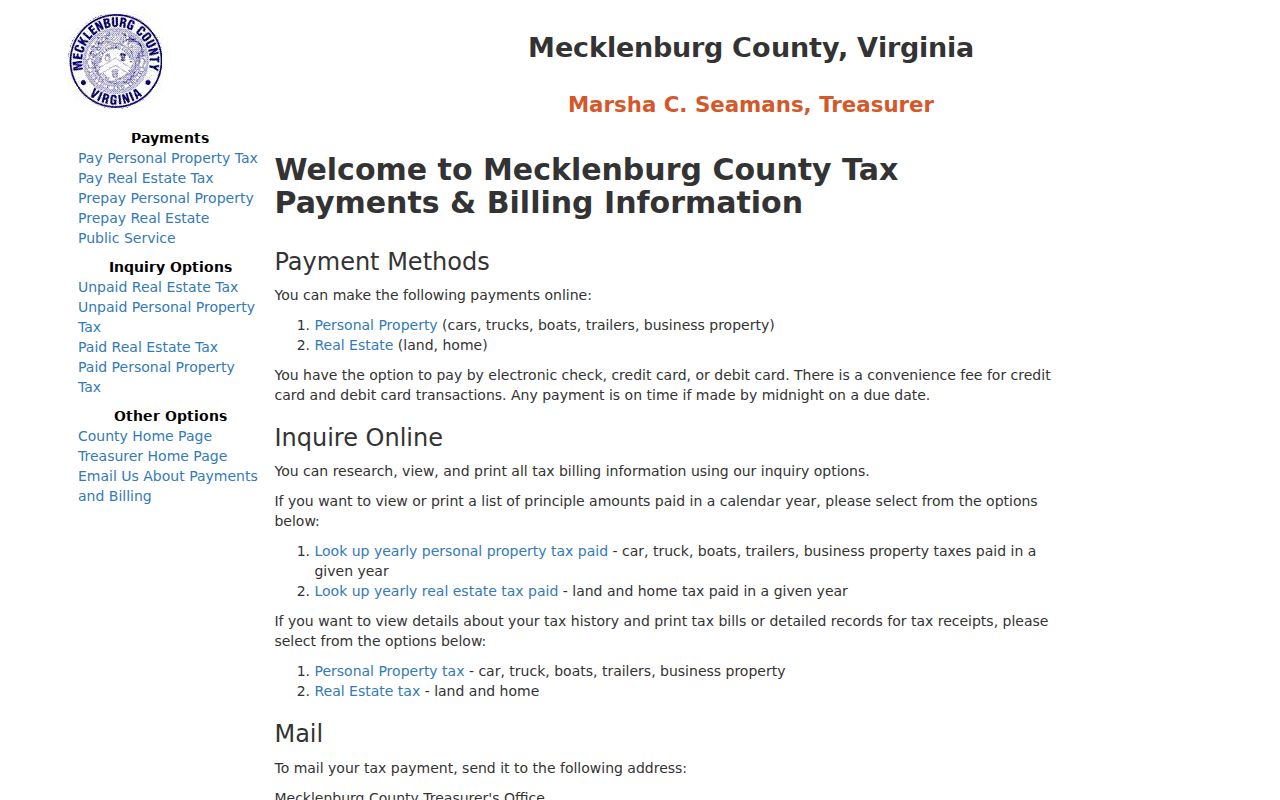
If the direct site still fails, call the Treasurer with the parcel or tax account number rather than assuming no bill exists.
Town Parcels Can Carry Two Local Taxes
Real estate inside Boydton, Brodnax, La Crosse, Chase City, Clarksville, or South Hill faces two local taxes. Property there is taxed by both the county and the town. The assessor and deed offices stay at the county level. But the final bill can fold in a town rate. That split creates real confusion. A town mailing address, an assessment value, and a bill total may each describe a different jurisdiction.
The Board of Supervisors, not the assessor, sets the county tax rate. Payment and bill questions go to the Treasurer; assessment questions go to the Commissioner. For a parcel near a town edge, trust the official boundary. Do not rely on its ZIP or postal city.
Downloadable Mecklenburg Land Books
Mecklenburg County publishes its current real-property land-book data as a CSV file. Fiscal-year copies run from 2020 through 2026 in the county archive. The files are data-only. That means you need a spreadsheet program to sort or filter the rows. A past land book works well as a dated comparison of owner and value entries, though an authoritative answer still calls for a current portal record or the Commissioner's office.
Start with the county's current land-book page or the land-book archive. The archive lets you set an older assessment beside the present tax roll without mistaking a saved file for live property records.
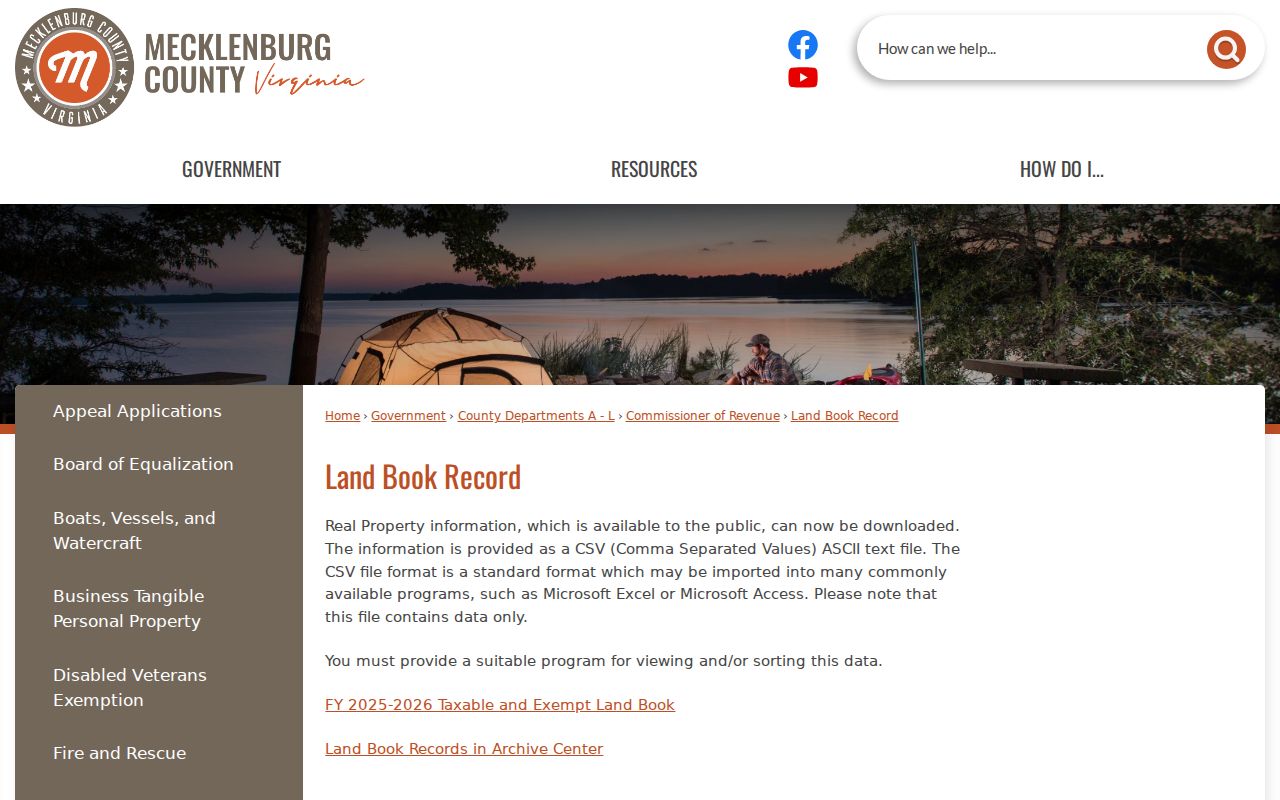
Read any historical row against the fiscal-year label and the July 1 assessment date.
Compare an Earlier Tax Year
The FY2020 through FY2026 archive makes it possible to trace a parcel's history. You can see how the assessed owner and value shifted over time. A CSV row can reveal a change in the land or improvement amount. It cannot tell you why the change happened. A new structure, a correction, a reassessment, or a revised parcel description could each explain the difference. When a comparison raises questions, ask the Commissioner of the Revenue for the explanation behind the entry.
Pull the file you need from the county archive list. Keep the fiscal-year label with your notes.
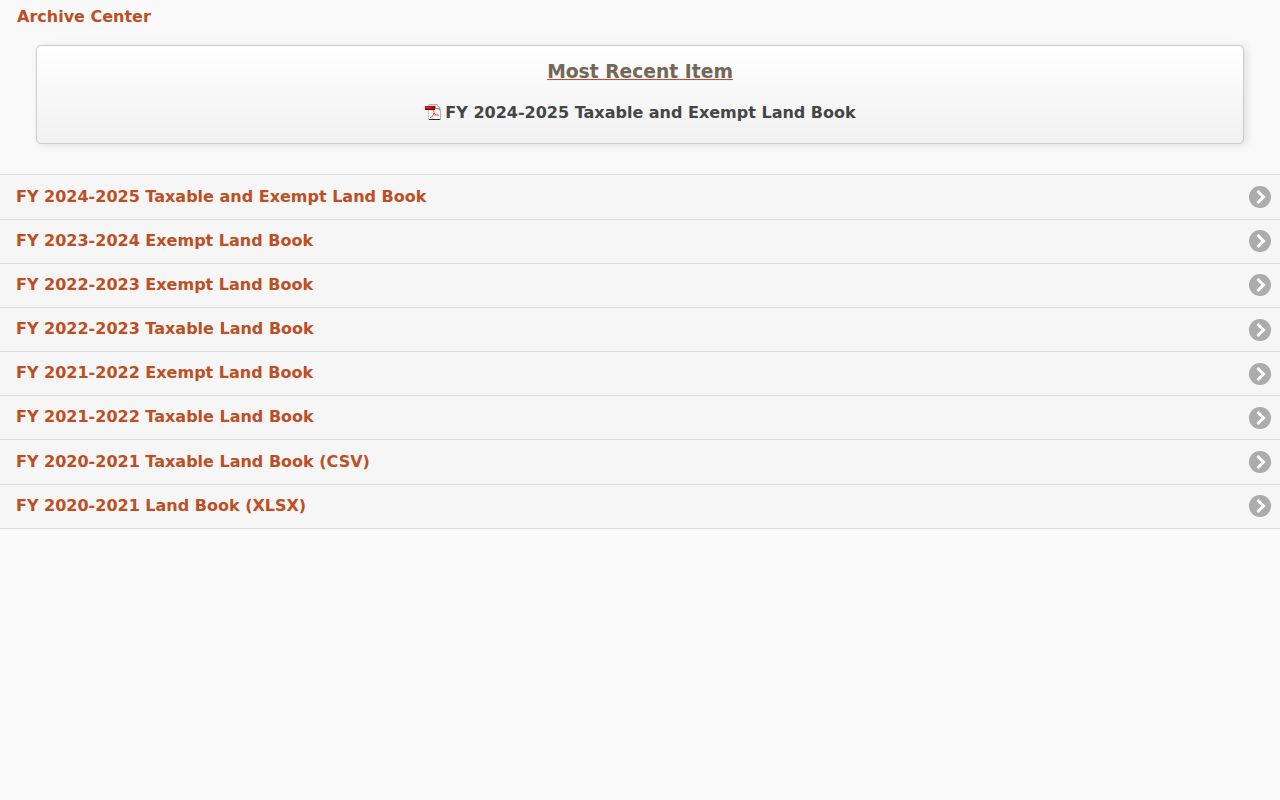
A historical land-book row is a dated snapshot, never proof that a tax bill was paid.
Look Up a Mecklenburg County Tax Bill
Start with the tax account or parcel number when you can. An address helps locate the assessment. Payment status, though, comes from the Treasurer's account. If the county's inquiry page is unavailable, call the Treasurer with the parcel number, bill year, and owner of record name.
- Locate the parcel and current assessed value through the Commissioner’s assessment portal.
- Open the Treasurer’s tax information page and follow the real-estate inquiry route if available.
- Check the bill year, amount charged, paid status, and any remaining balance with the Treasurer.
- Keep any assessment relief or exemption question with the Commissioner, not the payment office.
- Assessed value
- The county’s fair-market-value assessment used in the tax calculation.
- Tax rate
- The rate set by the Board of Supervisors and applied to assessed value.
- Disabled-veteran relief
- Relief administered by the Commissioner for qualifying 100% service-connected total and permanent disability.
- Tax delinquency
- An unpaid real-estate tax account handled by the Treasurer.
Mecklenburg County Delinquency and Sale Rules
The Treasurer lists several collection tools for delinquent accounts. Those can include a distress or seizure warrant, DMV stops, and set-off debt collection. They can also include Treasurer's liens, warrants in debt, and sale of the property. Real estate may be sold under one condition. It must still be delinquent on December 31 after the second anniversary of the due date. A tax-sale notice is one step in a legal process. It is not proof that ownership has changed hands.
See the Treasurer's delinquent-tax page. Then confirm any sale order, deed, or release through the Circuit Clerk's deed records.
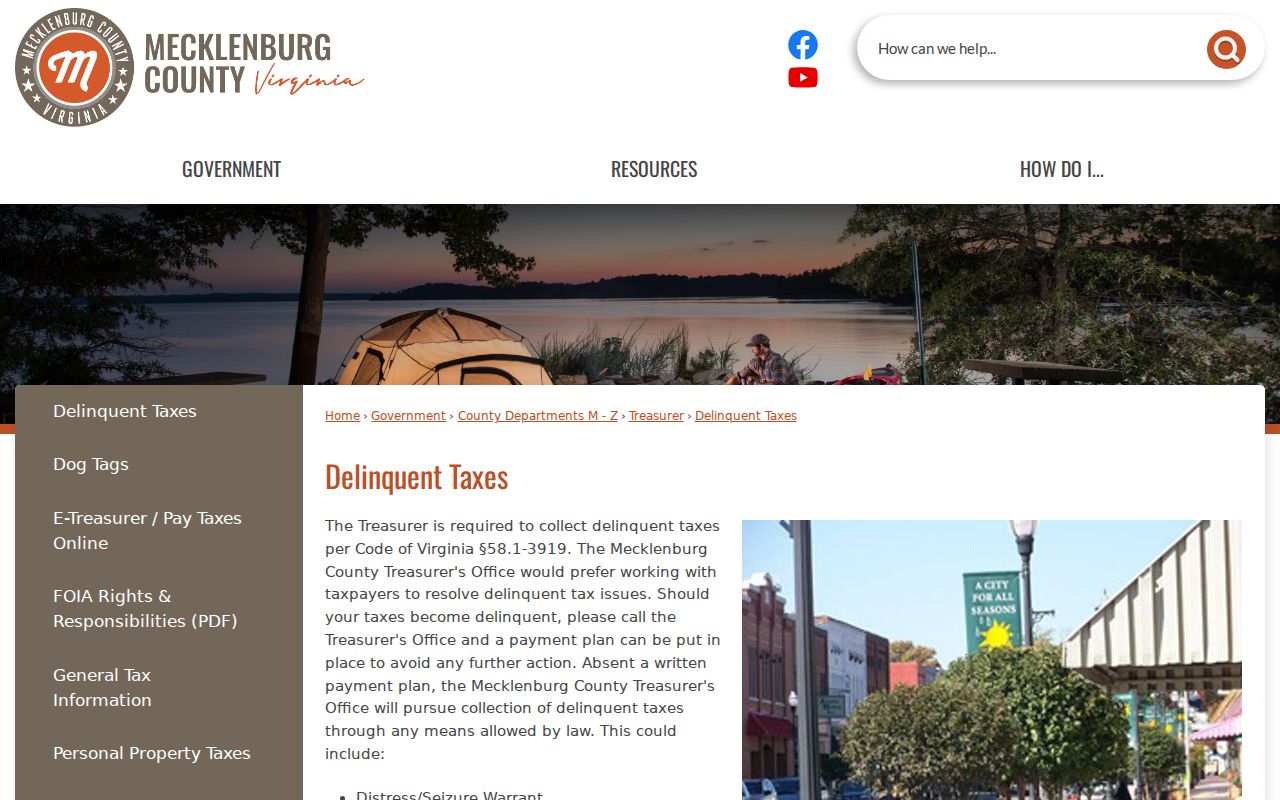
Track the account, the court action, and the recorded conveyance separately before calling a tax sale complete.
Check Relief and Appeal Forms
The county's Forms page lists a 2026 Board of Equalization application. A separate real-estate application covers disabled veterans. The FAQ also describes relief for a total and permanent service-connected disability rated at 100%. Form fields and filing deadlines belong to the application itself. Verify the current paperwork with the Commissioner. Confirm delivery rules before relying on any saved copy.
Download the official real-estate forms and keep a copy of whatever you submit.
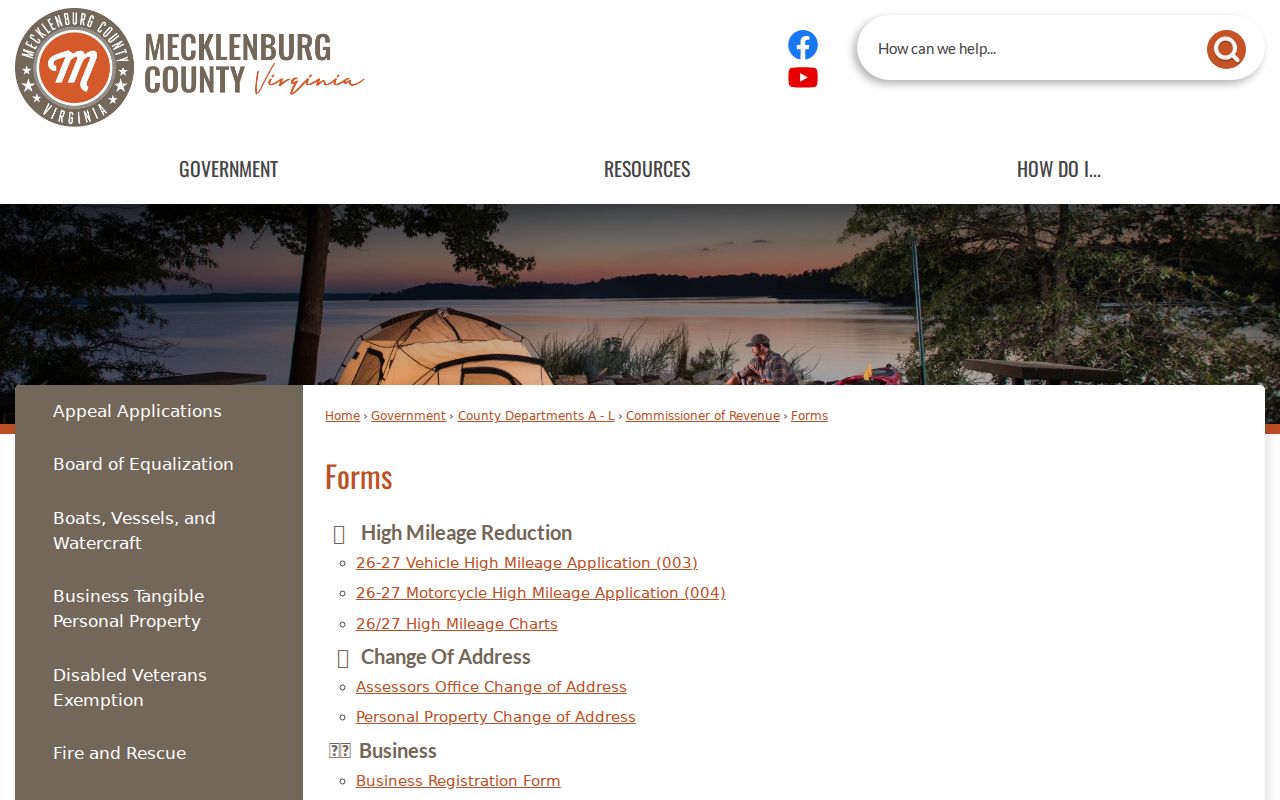
The county's form list is the authority for current applications; an old saved PDF is not.
Appeal a Mecklenburg County Assessment
A taxpayer can contest fair market value through Mecklenburg County's assessment review process. A taxpayer can also contest lack of uniformity, acreage, or a mistake of fact. The assessor's valuation is presumed correct. That presumption means your appeal needs a clear record. Gather comparable sales, an appraisal, photographs, and measurements. Gather parcel corrections too, and any evidence showing the property differs from the assessment. The county posts a 2026 Board of Equalization application. The Commissioner's office handles the current filing dates.
Appeal window. Ask the Commissioner for the current Board of Equalization filing deadline and use the county’s current form. Do not assume a deadline from another county or a prior reassessment year applies.
Virginia Code sections 58.1-3378 through 58.1-3381 set the notice and hearing rules for the Board. An appeal should target the parcel's July 1 value rather than argue that a later sale price or tax bill feels high. A dispute about a bill or payment belongs with the Treasurer instead.